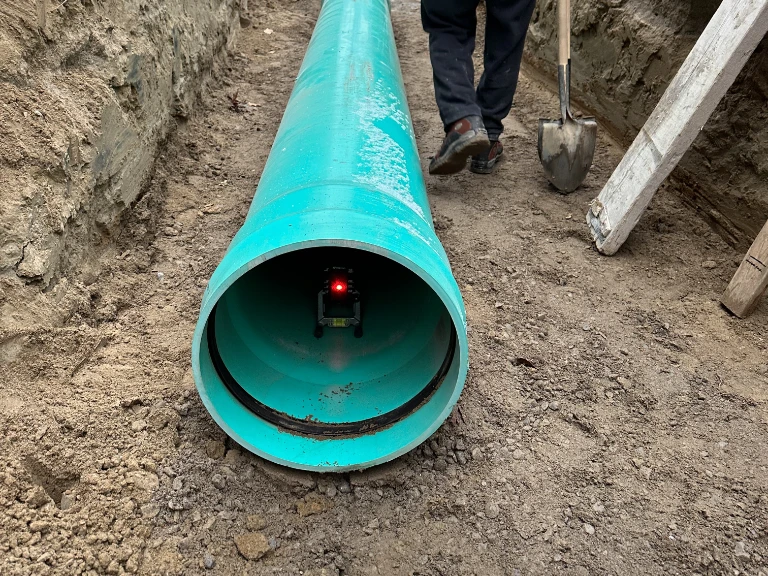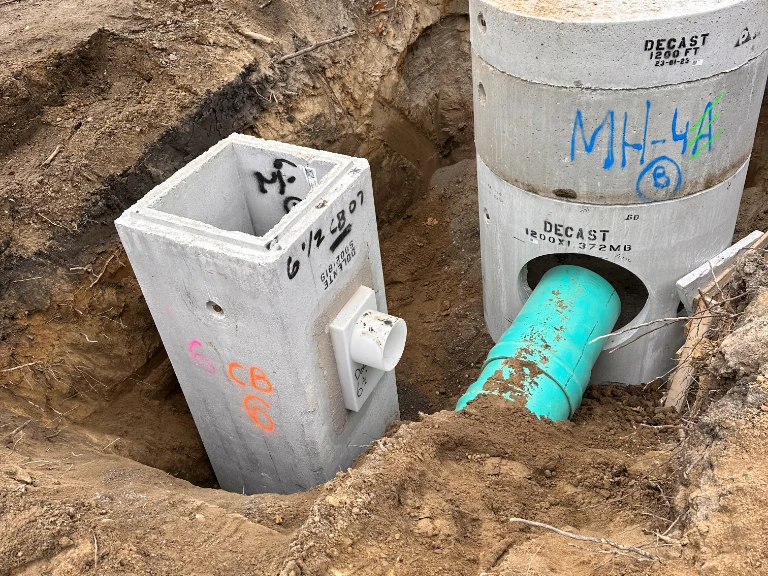
Cured-in-place pipe lining completely restores broken or failing drain and sewer pipes without having to dig up the ground or have direct access to the pipe.
We’ve had the opportunity to install over 25,000 ft of liner in the GTA area, needless to say we are extremely experienced in this area and even manufacture some of the materials ourselves. If you are considering replacing your drain or sewer pipe we strongly recommend you contact us to discuss the benefits of our drain lining services.
We’ve broken the process down here into eight illustrative steps showcasing the process from start to finish:
![]() | Step 1. Camera Inspection The closed circuit television camera permits to identify all visual defects inside the designated pipe (blockage, collapsing, water infiltration, etc…), also, it is used after rehabilitation process. |
![]() | Step 2. Snaking Snaking is the most effective method of pipe cleaning and it allows to remove debris and/or tree roots from the sewer system. |
![]() | Step 3. Insertion of a bladder into felt tube The tube consist of a layer of laminated, flexible, needled felt capable of caring resin, withstanding installation pressure. The bladder is made from reinforced PVC membrane and can bear pressure up to 30 PSI. |
![]() | Step 4. Preparation of epoxy composition Appropriate amount of resin and hardener are measured according to the length of the liner and carefully mixed to form a homogenous substance. |
![]() | Step 5. Saturation of a fibrous tube with epoxy The pre-measured amount of resin is introduced into the liners front end and a vacuum is drawn from the opposite end. The vacuum and rolls are assisting the resin penetration into the liner fabric. |
![]() | Step 6. Insertion of a liner into the old pipe. The liner/bladder assembly is inserted into the old pipe through the access point – a small excavation or a clean-out. The pushing rods inside the assembly are capable of delivering a liner up to 30 feet long. |
![]() | Step 7. Inflating the tube with air. The liner is typically held in place at 10-12 PSI for 3-4 hours and cured at |
![]() | Step 8. Cutting the liner to get a new pipe. To conform the quality of the installed liner second camera inspection is performed and the new pipe is connected to the existing sewer system. |